Musty Smell, No Visible Mold: The Gaithersburg Inspection Order
Most mold inspections start with a smell, not a photograph. Microbial growth releases the musty, earthy odor people describe as wet cardboard, and in a closed-up home the smell is strongest when the AC starts, when a closet opens, or when you come home after the house has been closed all day. Homes do not smell musty for no reason; the inspection's job is finding where the growth is and what is feeding it.
In Gaithersburg the first sign is a finished basement that smells like August in March: the sump pit's waterline, the wall base behind the sofa, and the cold-water pipe sweating over the storage bins. A smell that tracks summer storms is a sump and grading story; a smell that never leaves is a plumbing or condensate story. Either way the first instrument is a hygrometer, and the first fix is the water, not the spray.
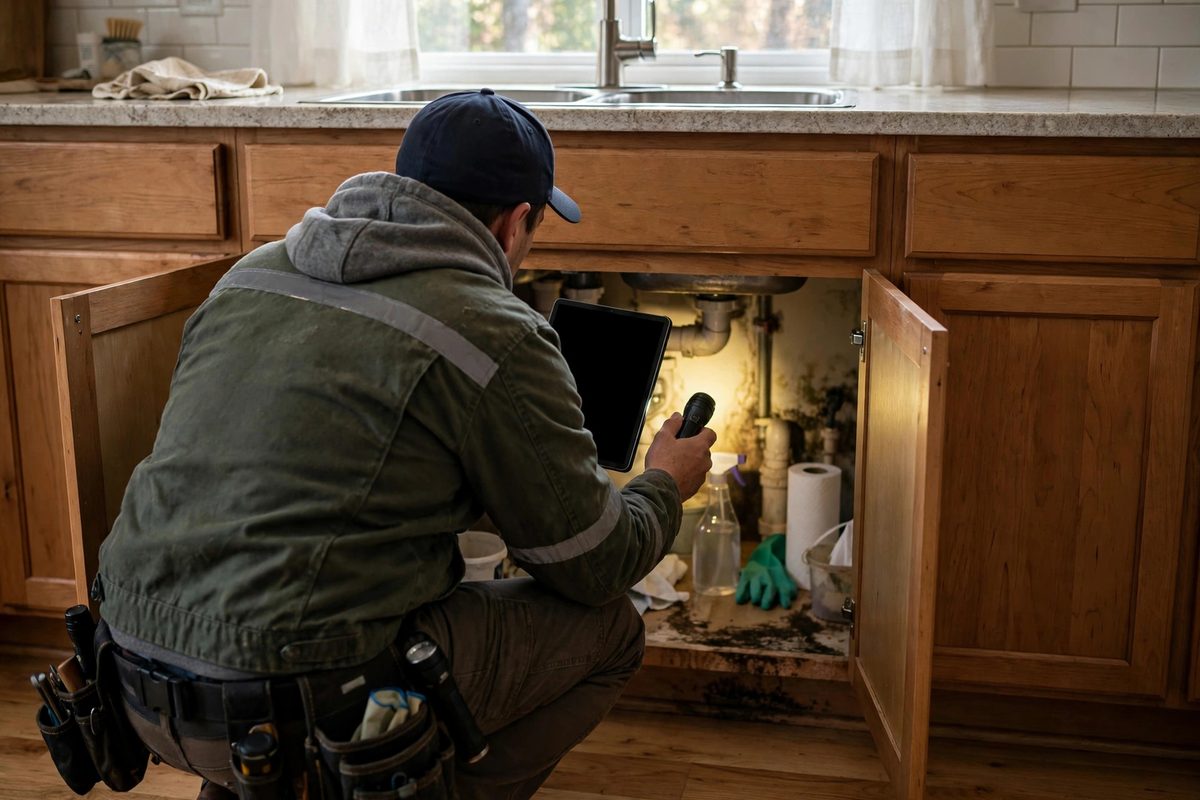
The order matters. Moisture meters and infrared come before any sampling, because growth always sits downstream of water: a wet wall base, a sweating duct, a condensate pan, a shower pan that failed quietly. A lab report that names species without a moisture map names the passenger and misses the driver.
When in doubt, the meter is the referee: materials at normal moisture with surface mildew are a cleaning problem; materials reading wet with growth are a source problem wearing a mold costume. The written report should say which one you have, room by room.
Request a callback
Prefer to talk later? Leave your details and an independent local pro will call you back. No charge to you, no obligation.
Muddy Branch Mold Removal is a free referral service. Submitting this form connects you with independent local contractors who provide the work.